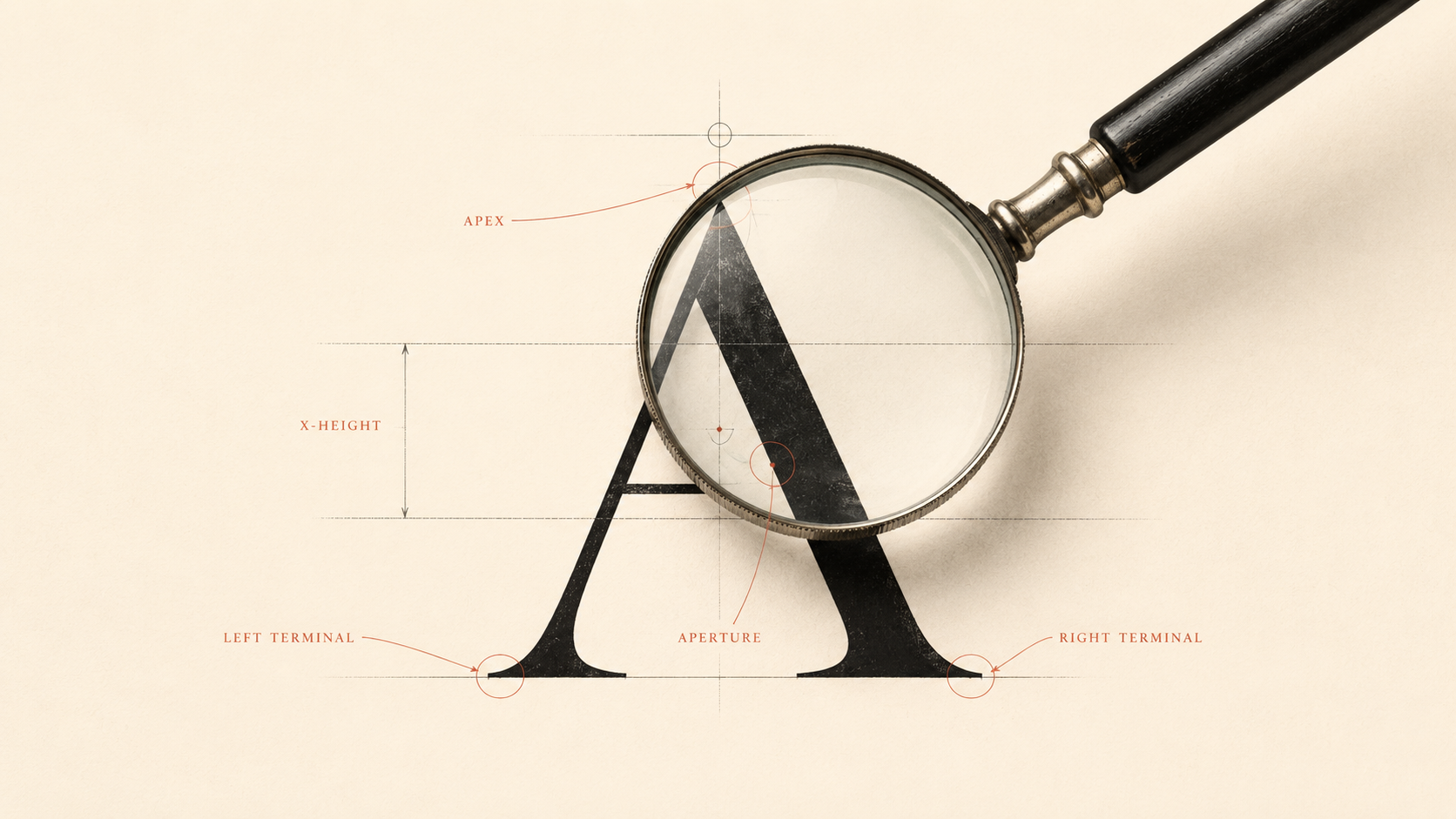
Typography is one of the most powerful tools in a brand's visual identity. The font a company chooses for its logo communicates personality, values, and positioning before a single word is consciously read. Serif fonts suggest heritage and authority. Sans-serifs project modernity and accessibility. Custom typefaces signal that a brand is serious enough to invest in exclusivity.
Many of the world's most recognised logos use either proprietary typefaces designed from scratch, or modified versions of existing commercial fonts. In both cases, typography is rarely an afterthought. According to research by the American Institute of Graphic Arts (AIGA), typography is consistently rated among the top three elements of effective brand identity, alongside color and shape.
Below is a comprehensive list of famous brands and the fonts used in their logos, or the closest matching typefaces where exact fonts are proprietary. Each brand name links to a dedicated logo font page with more detail.
The most common fonts across famous logos are Futura and Helvetica, two typefaces now over 60 years old that continue to anchor the visual identity of global brands. Custom typefaces, once reserved for only the largest companies, have become increasingly common since 2015 as foundries have scaled bespoke type production. Brands like Google, Netflix, and BBC all now maintain proprietary typefaces used exclusively across their identity systems.
Why Logo Fonts Matter More Than You Think
A logo is seen, on average, hundreds of times before a consumer forms a conscious opinion about it. The typeface carries subliminal weight in every one of those exposures. Serif fonts like Didot or Trajan evoke prestige and history. Geometric sans-serifs like Futura or Avenir communicate efficiency and forward-thinking. Script fonts feel personal, warm, and handcrafted.
The stakes are enormous. A single global rebrand can cost upward of $100 million when all touchpoints are included. When Gap attempted a logo change in 2010, public backlash was so severe that the company reverted to its original Spire font within one week, a lesson that underscores how deeply typography is tied to brand equity.
Understanding what fonts famous brands use is valuable for three reasons: it reveals the strategic thinking behind visual identity, it serves as a research starting point for designers working on new logos, and it helps decode why certain brands feel the way they do.
The Three Types of Logo Fonts
Before diving into the brand list, it helps to understand how logo fonts are categorised. Almost every famous logo falls into one of these three buckets:
| Type | What it means | Examples |
|---|---|---|
| Custom / Proprietary Custom | A typeface designed exclusively for the brand. No one else can use it. | Google Sans, Netflix Sans, BBC Reith, Airbnb Cereal |
| Modified Commercial Modified | A licensed font that has been altered, stretched, condensed, or redrawn. Close to the original but distinct. | Zara (modified Didot), Nike (modified Futura), Coca-Cola (custom Spencerian script) |
| Off-the-Shelf Commercial | An existing commercial or free font used with little or no modification. | Amazon (Officina Sans), IKEA (Noto Sans), Supreme (Futura Heavy Oblique) |
The distinction matters because designers can legally replicate an off-the-shelf logo font, but cannot replicate a custom one. It also helps explain why some brands look similar to each other despite having no relationship.
Technology Brand Logo Fonts
Tech companies overwhelmingly favour clean, geometric sans-serifs. Legibility at small sizes and on screens drives most decisions here.
The dominant trend in tech: virtually every major technology company has invested in a custom or exclusive typeface since 2015. Google commissioned Product Sans, Netflix developed Netflix Sans (saving an estimated $1 million per year in font licensing for external displays), and Microsoft built Segoe UI as a core part of its design system. The geometric, humanist sans-serif style dominates because it renders crisply across screen sizes and resolutions.
Fashion Brand Logo Fonts
Fashion brands split sharply between high-contrast serif elegance and stark, uppercase minimalism. Both approaches project luxury, just through different visual languages.
Didot deserves special mention in fashion. Originally designed by Firmin Didot in the early 19th century, this high-contrast serif typeface has become almost synonymous with luxury fashion. Vogue built its entire visual brand on Didot. Zara controversially collapsed its letterforms together in the 2019 rebrand, creating kerning so tight that some letters overlap, a deliberate provocation that sparked widespread debate among designers.
Supreme, by contrast, uses Futura Heavy Oblique, an unmodified off-the-shelf font from Paul Renner's 1927 geometric masterpiece, yet has built a streetwear empire around its red box logo. Sometimes the power is in the context, not the exclusivity of the font.
Food and Retail Brand Logo Fonts
Consumer packaged goods and retail brands prioritise friendliness, approachability, and recognition at distance, which often means bold, rounded, or script-influenced typography.
Coca-Cola's Spencerian Script logo dates to 1887, making it one of the oldest continuously used logo typefaces in the world. The hand-drawn letterforms have been refined and protected for over 130 years, yet the brand has never strayed from the script format. This consistency is part of why the logo is recognised by 94% of the world's population, according to brand equity research.
IKEA's 2019 switch from Futura to Noto Sans attracted significant criticism from the design community. Noto Sans was chosen partly for its global character support, covering over 800 languages, which matters enormously for a brand operating in 50+ countries. Practical globalisation often overrides typographic prestige.
Automotive Brand Logo Fonts
Car brands use typography to reinforce speed, precision, and status. Wide-tracking, uppercase lettering and thin serif variants are common choices.
German automotive brands are notable for the level of investment in custom type. BMW, Audi, Mercedes-Benz, and Volkswagen all maintain proprietary typeface systems used across all brand communications, not just the logo. BMW Type, developed with Dalton Maag, is used across all brand materials globally. For premium automotive brands, consistent typography is as important to brand equity as the vehicle design itself.
Sports and Entertainment Logo Fonts
Sports logos balance energy and gravitas, often combining bold condensed lettering with heritage cues. Many leagues use custom typefaces to maintain visual authority across broadcast, digital, and merchandise.
Media and Internet Brand Logo Fonts
Media brands range from institutional broadcasters with traditional typography to digital-native publishers that embrace modern, personality-driven type.
The BBC's investment in BBC Reith, its bespoke typeface launched in 2017, is a landmark in broadcast typography. Developed over several years by Dalton Maag, BBC Reith replaced a combination of Arial and Gill Sans across all digital platforms. The font is named after Lord John Reith, the BBC's founding director-general. It is designed to work across the BBC's enormous range of contexts, from news to children's television to classical music content.
Classic and Iconic Logo Fonts
These are logos that have transcended branding to become cultural symbols in their own right. Their typography is studied in design schools worldwide.
Nike's use of Futura Bold for its wordmark is one of the most studied examples in branding history. Designed by Paul Renner in 1927, Futura was built on pure geometric forms: circles, triangles, straight lines. Nike's version modifies the letterforms subtly, but the geometric confidence of the original font perfectly mirrors the brand's athletic aspiration. The Futura typeface family appears in more major logos than perhaps any other single font.
NASA's typographic history is itself a cultural story. The agency uses two distinct wordmark styles depending on era: the classic "meatball" logo uses a custom serif, while the famous 1970s "worm" logo uses a modified Helvetica. The worm was retired in 1992, revived in 2020, and both remain in use today, a rare case of a brand maintaining two competing identities simultaneously.
What the Data Tells Us About Logo Typography Trends
Looking across 100 brands and multiple decades of logo design, several clear patterns emerge that designers and brand strategists should understand.
The Rise of Custom Typefaces
Before 2010, custom typefaces were reserved for the largest corporations with the largest budgets. Since then, the market has changed significantly. Type foundries like Dalton Maag, Commercial Type, and Colophon have democratised bespoke type production. More brands now commission proprietary fonts, partly for brand protection, partly for the savings that come from eliminating per-use licensing fees at scale.
Helvetica's Enduring Dominance
Designed by Max Miedinger in 1957, Helvetica remains the most commercially influential typeface in history. Its neutrality is its superpower: it communicates precision without personality, which makes it ideal for brands that want to let their product, not their typography, do the talking. Calvin Klein, Target, American Airlines, and Jeep all rely on Helvetica or Helvetica Neue. Its visual DNA also influences dozens of custom typefaces developed for major brands.
Sans-Serif vs Serif: Industry Splits
Technology and retail brands overwhelmingly prefer sans-serif typography. Fashion and luxury brands are split roughly 50/50 between serif and sans-serif, with high-fashion (Chanel, Gucci, Vogue) favouring high-contrast serifs and contemporary fast-fashion favouring minimalist sans-serifs. Automotive brands almost universally use bespoke type systems with custom lettering that borrows from both traditions.
The Script Font Exception
Script fonts are rare among major brand logos precisely because they are so hard to read at small sizes and across cultures. The brands that use them, Coca-Cola, Ford, Instagram, and Cadillac among them, do so as a heritage marker. In every case, the script was established early in the brand's history and has become too recognisable to abandon. New brands rarely adopt script logos today.
For designers: If you want to find a font similar to a famous logo, start with Google Fonts or Adobe Fonts for free and commercial alternatives. Many off-the-shelf geometric sans-serifs like Montserrat, Raleway, or Josefin Sans draw from the same Futura tradition used by dozens of major brands.
Explore by Category
Dive deeper into logo fonts by industry or typeface family:
Frequently Asked Questions
Answers to the most common questions about fonts used in famous logos.