🔥 Design Webflow sites with AI
The digital landscape has fundamentally changed over the past five years. Attention spans are shorter than ever before. Consumers now prefer consuming information in quick, bite-sized visual formats.
This shift has made short-form video the undisputed king of online content. Platforms like TikTok, Instagram Reels, and YouTube Shorts dominate global screen time. Consequently, brands and creators are rushing to keep up with the demand.
To meet this overwhelming need for content, the technology sector has responded. The development of the AI video generator has introduced a new paradigm in digital advertising. These tools are altering how we conceptualize, produce, and distribute video ads.
Creating high-quality video content has traditionally been a slow and expensive process. It requires scriptwriters, camera operators, video editors, and sound engineers. For a 15-second social media ad, the production cycle could take weeks.
Modern algorithms demand daily uploads to maintain visibility. This creates a severe burnout cycle for creative teams. Traditional production methods simply cannot scale to meet these daily algorithmic demands.
According to HubSpot’s State of Marketing report, short-form video yields the highest return on investment (ROI) of any format. However, 43% of marketers state that lacking the time to create video is their biggest hurdle. The math simply does not work for small to medium-sized businesses.
Brands are forced to choose between high-quality, infrequent posts or low-quality, daily posts. This constant struggle has created a massive gap in the market. A new solution was desperately needed to resolve this production bottleneck.
The rise of generative artificial intelligence is directly addressing this content gap. We have moved rapidly from AI text generation to AI image creation. Now, the frontier is fully focused on dynamic motion and sound.
Artificial intelligence is drastically cutting down the hours spent on repetitive editing tasks. A recent study by McKinsey & Company highlights that generative AI could increase marketing productivity by roughly 10 to 15 percent. This translates to billions of dollars in saved time and resources globally.
An AI Ad Generator allows a single marketer to do the work of a small agency. By automating the visual assembly, teams can focus entirely on strategy and messaging. This is a fundamental shift in how digital advertising operates.
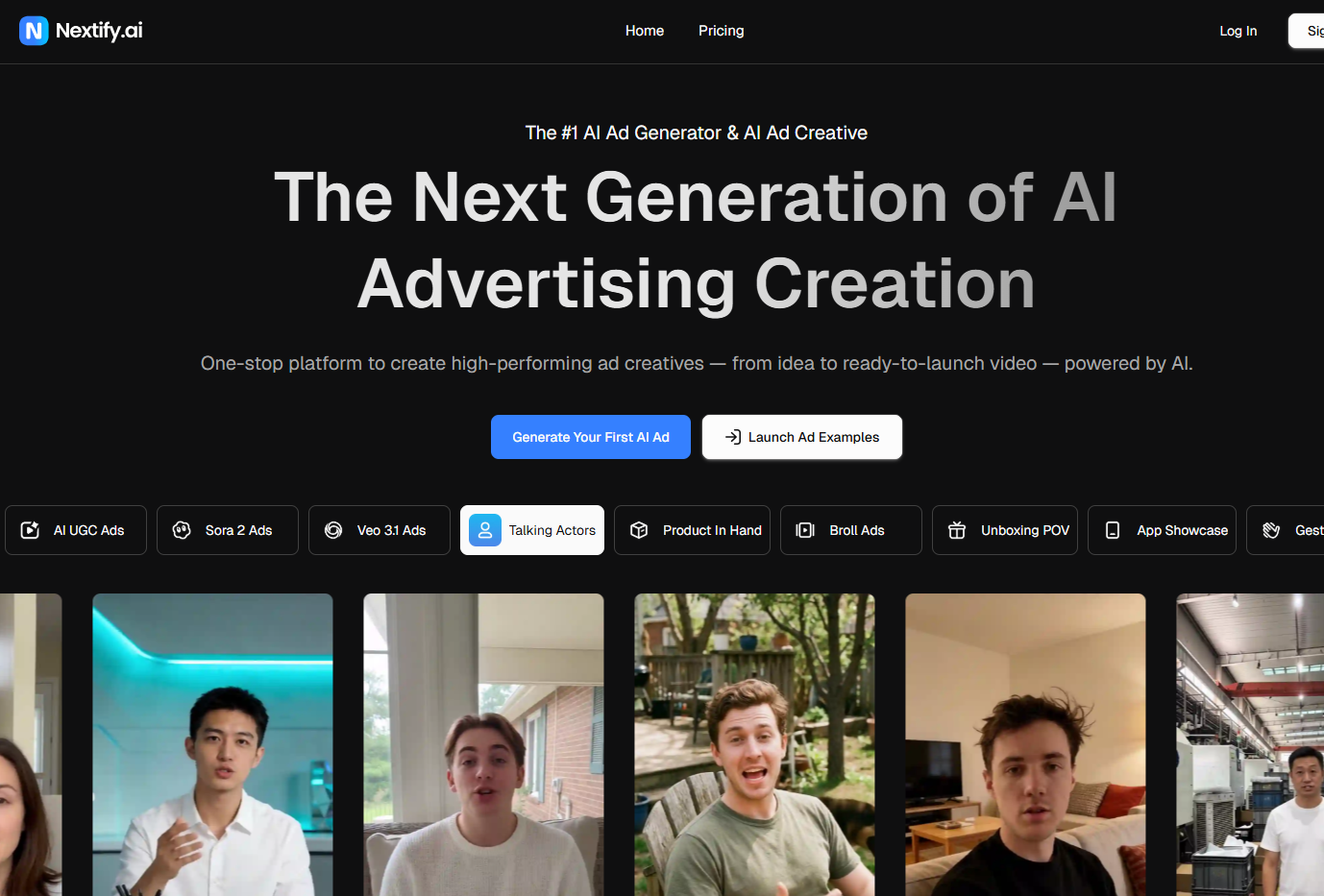
To understand how this technology is applied, it is helpful to look at active platforms. Nextify.ai is one such AI short-form video generator currently operating in the market.
Nextify.ai is designed specifically for creating short-form promotional content. It focuses on transforming text-based ideas into visual sequences. The system analyzes the input and pieces together relevant visuals, text overlays, and audio.
Unlike traditional editing software, it does not require a steep learning curve. The platform automates the timeline assembly and scene transitions. This allows users to generate video content without needing advanced technical editing skills.
It is important to note that tools like this are built for efficiency, not necessarily cinematic perfection. They excel at producing high volumes of social-media-ready ads. They provide a practical solution for the fast-paced nature of digital marketing.
Understanding the workflow of an AI video generator helps set realistic expectations. The process is generally straightforward and highly automated. It bridges the gap between a raw concept and a finished file.
The first step usually involves feeding the system a script or a detailed prompt. You describe the product, the target audience, and the core message. The AI then processes this text to understand the context and desired tone.
Next, the engine searches its database or generates visuals that match the narrative. It automatically splices these scenes together, applying pacing that fits short-form trends. Captions and background music are often synced automatically to the beat.
Finally, the user reviews the generated draft. While the AI does the heavy lifting, human oversight is still required in this final stage. Users can tweak scenes, change text formats, or swap out music tracks before exporting.
No technology is perfect, and AI video generation is no exception. It is crucial to evaluate these tools objectively. Understanding their limitations is just as important as knowing their benefits.
The primary advantage is speed and volume. Case studies in the e-commerce sector show that using AI tools can boost content output by over 40%. Brands can now test ten different ad variations in the time it used to take to produce one.
Cost reduction is another undeniable benefit. Small businesses can launch video marketing campaigns without hiring external production agencies. It democratizes access to high-performing video formats.
Despite rapid advancements, AI can still struggle with complex brand tones and subtle emotional nuances. The generated footage can sometimes feel generic or lack a unique artistic signature. It requires a clever human prompt to make the output truly engaging.
Additionally, AI generators occasionally produce minor visual glitches. Artifacts in the footage or slightly unnatural movements can still occur. Therefore, human editors are still vital for quality control and final polish.
Not every brand or creator needs an AI video generator. However, for specific use cases, the technology is highly disruptive. It serves certain segments of the market exceptionally well.
E-commerce brand owners are perhaps the biggest beneficiaries. They need to run continuous A/B tests on TikTok and Meta ads to find winning creatives. AI tools allow them to generate video variations at the necessary scale.
Solo marketers and social media managers also find immense value here. When managing multiple accounts, time is the most constrained resource. These platforms allow a single person to maintain a consistent posting schedule across various channels.
Content creators looking to repurpose long-form podcasts or blogs also use these tools. The AI can summarize long texts and turn them into short, shareable clips. This maximizes the lifespan of their original content.
Let us look at a practical scenario to illustrate the real-world impact. Consider a dropshipping business trying to sell a new gadget. They need fresh ad creatives every three days to prevent ad fatigue.
Using traditional methods, the business would spend hundreds of dollars a week on freelancers. By integrating an AI video generator, the founder inputs the product descriptions directly. The tool produces five different 15-second ads in under an hour.
The founder then runs these ads simultaneously with a small budget. They quickly identify which specific video hooks the audience best. This rapid testing cycle often leads to a noticeable increase in click-through rates and lower acquisition costs.
Data supports this agile approach to marketing. According to marketing practice guides, ads that are refreshed weekly perform significantly better over time. AI simply makes this rapid refresh rate practically possible.
The integration of AI into video production is no longer a future concept. It is a present reality that is reshaping job roles and marketing strategies. However, the narrative of AI replacing human creativity is largely overblown.
AI will not replace great storytellers or visionary directors. Instead, it will replace the tedious, repetitive tasks associated with video editing. It frees up human mental energy for higher-level strategic thinking.
To successfully generate video with AI is becoming a distinct skill in itself. The most successful marketers will be those who learn to collaborate with these tools. They will use platforms like Nextify.ai to execute their creative visions faster and more efficiently.
Ultimately, the goal of advertising remains the same: connecting with people. Technology is merely the vehicle. By combining AI's efficiency with human empathy, the future of digital marketing looks incredibly dynamic.